
Struggling to lose weight despite strictly monitoring your diet and exercising daily? It’s a battle many face, and it’s important to recognize that your efforts are valid even when the scale doesn’t budge. Obesity is a complex metabolic disease, and sometimes willpower isn’t enough. In recent years, a revolutionary class of medications has completely transformed the weight management landscape, offering a sense of community and hope to millions. But how do glp-1s work for weight loss, and why are they so incredibly effective?

These medications, including well-known names like Ozempic, Wegovy, and Mounjaro, are precisely engineered tools. They are grounded in rigorous endocrinology and metabolic science. By mimicking specific natural hormones, they directly address the biological mechanisms of hunger. In this comprehensive guide, we will provide a transparent breakdown of the science behind these treatments, ensuring you have the medical rigor needed to make an informed decision with your healthcare provider.
The science: GLP-1 mechanism of action
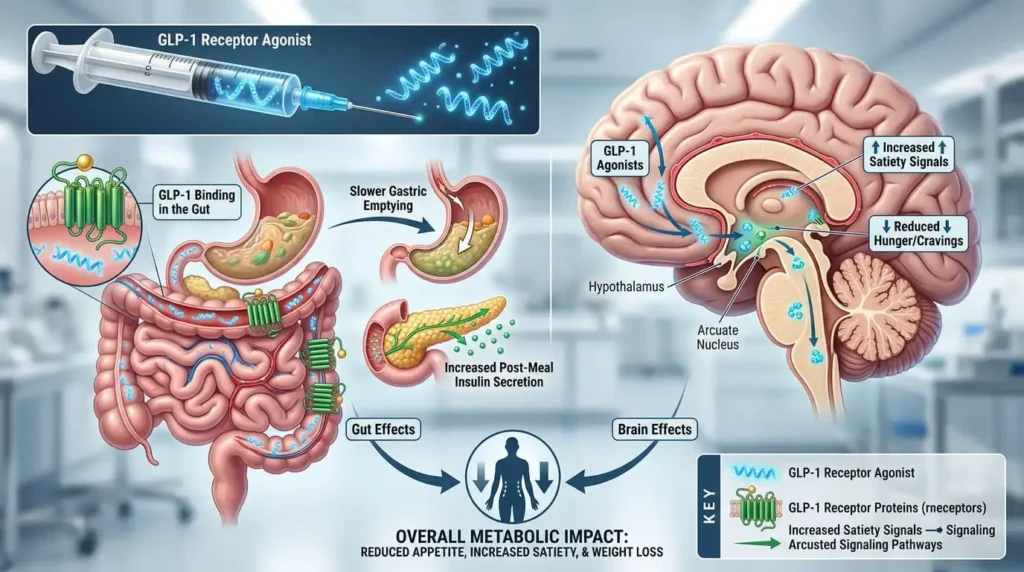
To fully grasp how do glp-1s work for weight loss, we must first understand what GLP-1 actually is. Glucagon-like peptide-1 (GLP-1) is a hormone naturally produced in your intestines when you eat. Its primary job is to tell your pancreas to release insulin, which helps lower your blood sugar. However, the natural GLP-1 hormone only lasts in the bloodstream for a few minutes before it is broken down by enzymes.
This is where the glp-1 mechanism of action comes into play through medication. Scientists have engineered synthetic versions of this hormone that resist being broken down immediately. These synthetic GLP-1s can remain active in your body for days or even a full week. By keeping the hormone active, the medication continuously signals to your body that you have just eaten. This prolonged signal delays gastric emptying meaning food stays in your stomach longer which keeps you feeling full and satisfied on significantly smaller portions of food.
Understanding the glp-1 mechanism of action is crucial because it explains why patients naturally reduce their caloric intake without feeling starved or deprived. It’s a biological correction, rather than a forced dietary restriction.
Semaglutide brain effect: rewiring your appetite
While the effects on the stomach are significant, the most profound changes happen in the brain. The semaglutide brain effect is a major reason why these drugs succeed where traditional diets fail. Your brain has specific receptors in the hypothalamus that regulate hunger, cravings, and the feeling of reward associated with eating.
When you ask how do glp-1s work for weight loss, the answer lies largely in neurology. The semaglutide brain effect involves the medication crossing the blood-brain barrier and binding directly to these appetite-regulating receptors. It essentially turns down the “food noise”—the constant intrusive thoughts about your next meal or snacking. Patients frequently report that for the first time in their lives, they simply forget to eat or can effortlessly walk past a plate of cookies.
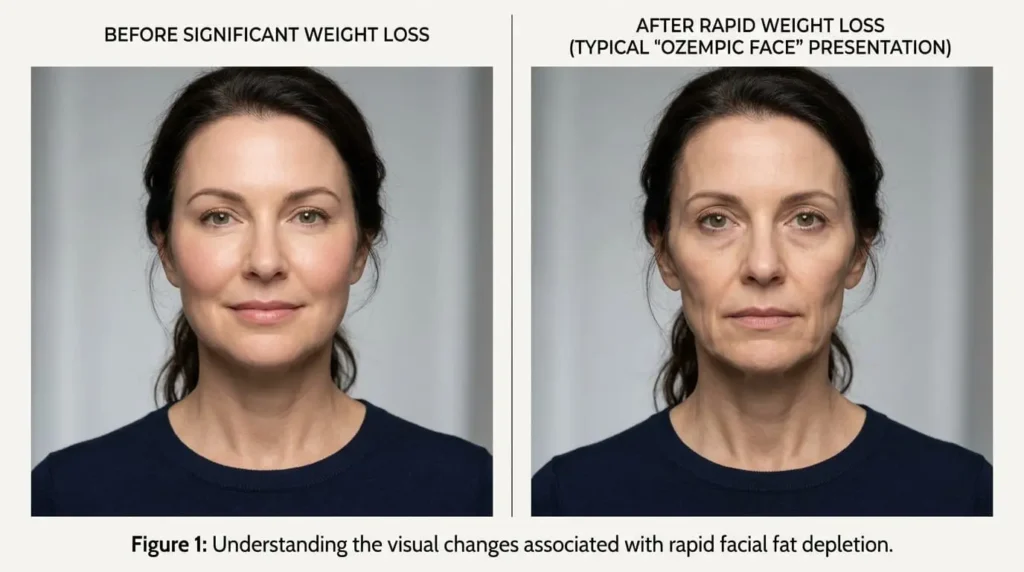
This neurological dampening of cravings is revolutionary. However, rapid fat loss from this appetite suppression can lead to cosmetic issues. It’s important to be aware of side effects like Ozempic face, which occur when you lose fat rapidly from your facial structure.
Buyer’s guide: how to choose a GLP-1 treatment in 2026
If you now understand how do glp-1s work for weight loss and feel ready to explore treatment, you must know how to choose the right option. With multiple GLP-1 receptor agonists explained by doctors today, making the right choice requires specific selection criteria.
Selection criteria for GLP-1 medications:
When selecting a protocol, transparency regarding costs and availability is paramount. High-stakes financial decisions should not be influenced by marketing fluff.
- FDA approval status: You must verify the specific indication. Wegovy and Zepbound are FDA-approved for chronic weight management, whereas Ozempic is for Type 2 Diabetes. This distinction is critical for insurance reimbursement.
- Single vs. dual agonists: Data indicates that dual agonists (Tirzepatide) may yield higher weight loss percentages but often come at a higher cash-pay price point.
- Administration method: Evaluate your tolerance for self-injection versus oral alternatives; your adherence depends on this practical factor.
- Cost and insurance coverage: These treatments are expensive. You must verify your specific pharmacy benefit manager (PBM) formulary. Without insurance, monthly costs can exceed $1,000; however, manufacturer savings cards can significantly reduce out-of-pocket expenses for eligible patients.
What to expect: how does ozempic work in the body?
A common question is specifically, how does ozempic work in the body compared to others? Ozempic is a brand name for semaglutide. When injected, how does ozempic work in the body involves a multi-organ approach. It increases insulin sensitivity in the muscles, decreases glucose production in the liver, and slows digestion.
Because your digestion is dramatically slowed, your dietary choices become paramount. Eating heavy, greasy foods while on these medications can lead to severe gastrointestinal distress. To maximize your results and minimize discomfort, it is highly recommended to follow a specific semaglutide adapted diet. This ensures your body gets the necessary nutrients without overloading your slowed digestive system.
GLP-1 receptor agonists explained: long-term outlook
To conclude our guide, let’s look at the long-term reality. With glp-1 receptor agonists explained, it becomes clear that obesity is treated much like hypertension or asthma as a chronic condition. These are not short-term fixes. Clinical data shows that if you stop taking the medication, the glp-1 mechanism of action ceases, your appetite returns to its baseline, and weight regain is highly likely.
Therefore, understanding how do glp-1s work for weight loss means committing to a long-term strategy that combines the medication with sustainable lifestyle changes.
The innovation of GLP-1 medications has completely shifted the paradigm of weight management from a psychological battle to a physiological treatment.
- ✅ The glp-1 mechanism of action physically slows digestion to keep you full.
- ✅ The semaglutide brain effect rewires your neurological cravings and stops “food noise”.
- ✅ Choosing the right medication requires evaluating FDA status, dual vs. single agonists, and costs.
If you’re ready to take the next step in your health journey, consult with a certified weight loss clinic to see if a GLP-1 is right for you.